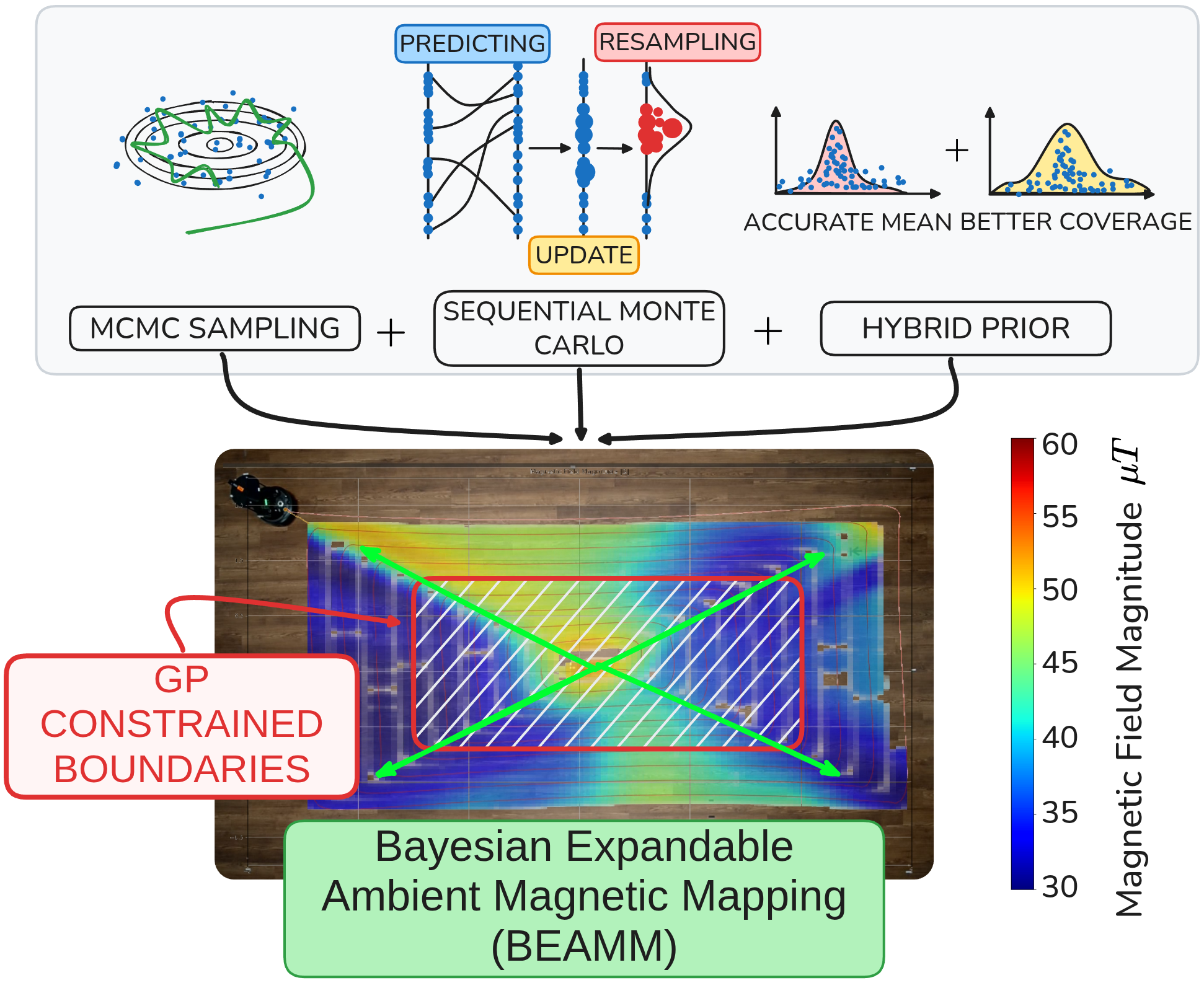
TLDR
Neural mapping method for indoor ambient magnetic fields with quantified uncertainty.
This paper presents a method that overcomes domain‑size and retraining constraints while preserving uncertainty estimates, we propose Bayesian Expandable Ambient Magnetic Mapping (BEAMM), a physics‑constrained Bayesian neural network (BNN) that enforces Maxwell's equations and continually learns a magnetic field map without a fixed set of basis functions.
The following are the list of contributions of this paper in brief:
We explore the impact of a Bayesian neural network on the magnetic mapping problem when compared against traditional Gaussian process based methods. Several ablation studies were conducted initially to understand the modeling effects of the chosen parameters. An overview of parameters are given below:
| Parameter | Value |
|---|---|
| Hidden Neurons | 128 |
| Number of NUTS Samples | 50 |
| Initial NUTS Step Size ($\tau$) | $3 \times 10^{-6}$ |
| NUTS exploration steps per sample | 30 |
| Number of Hidden Layers | 2 |
| Activation Function | Softplus |
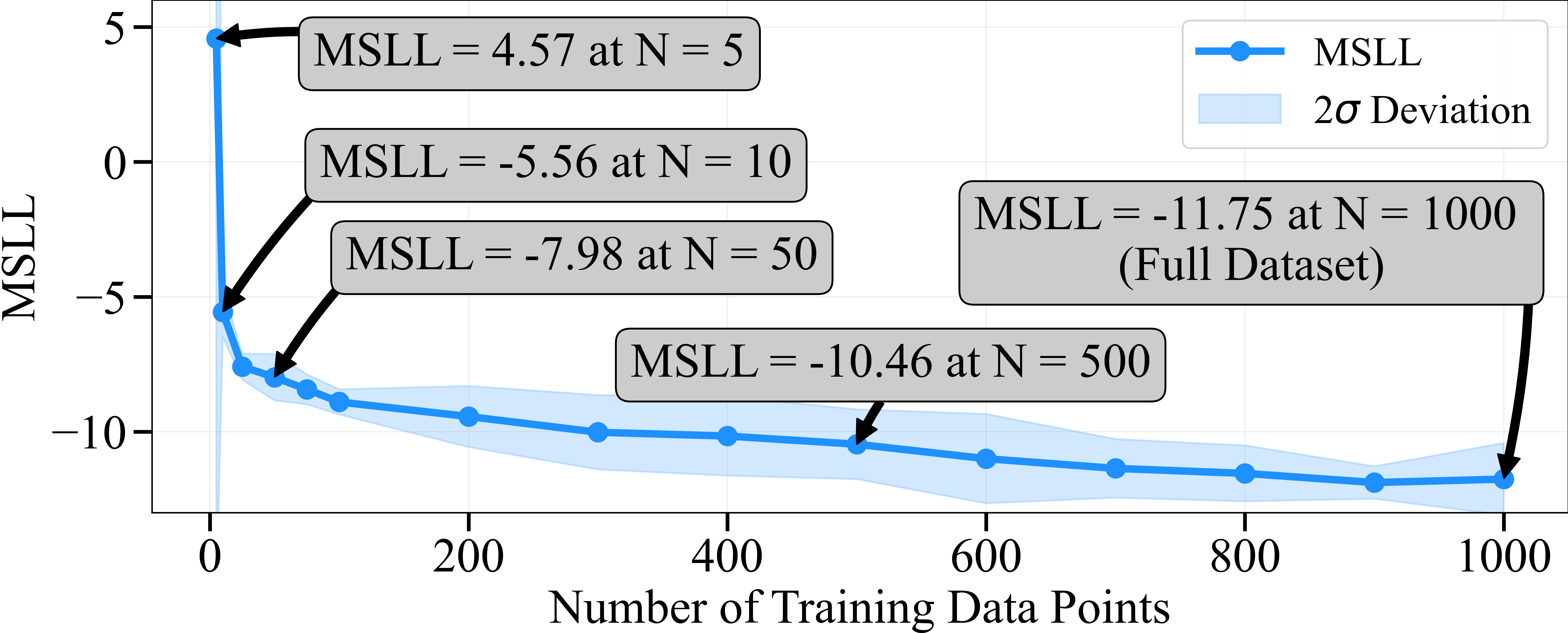
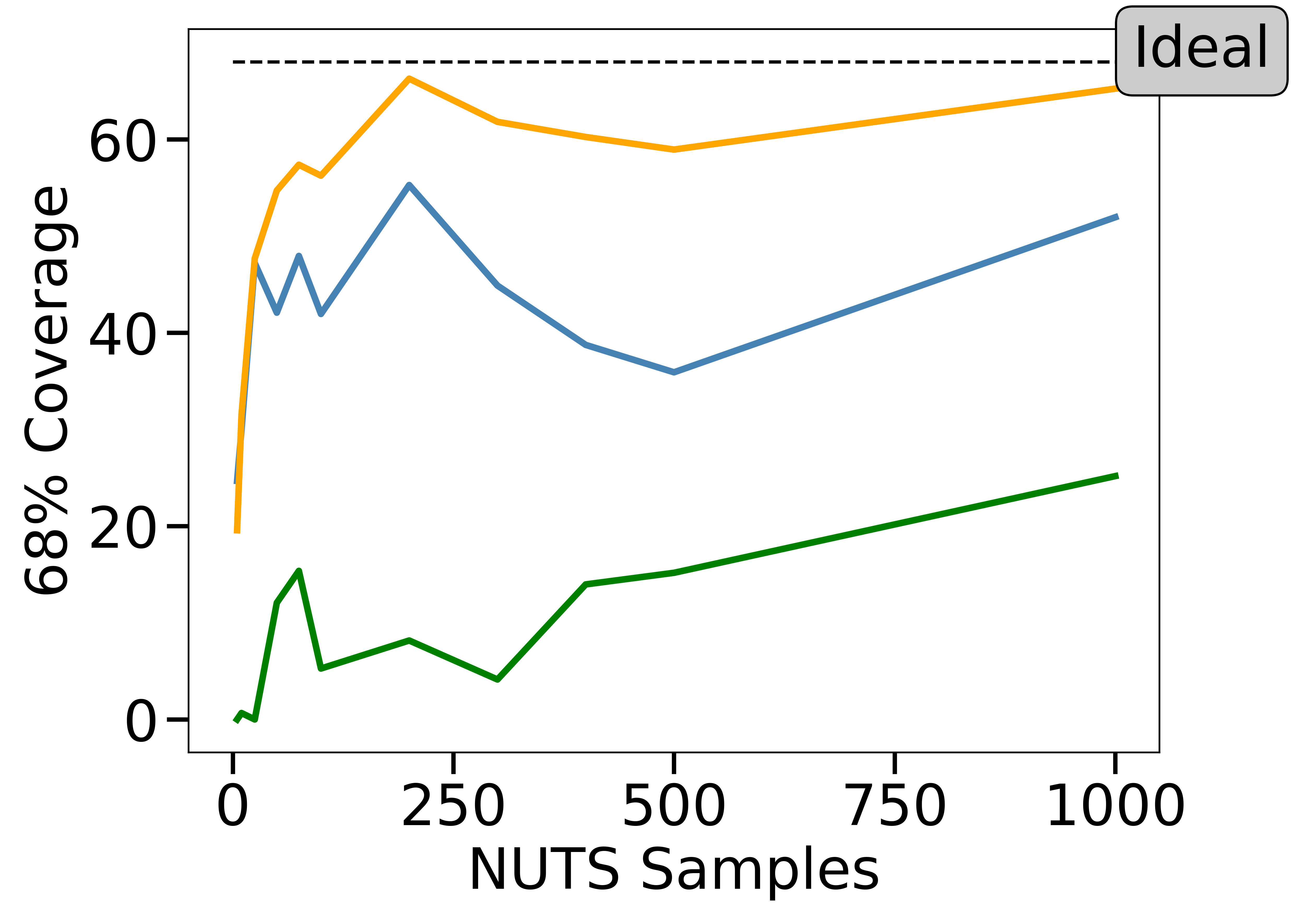
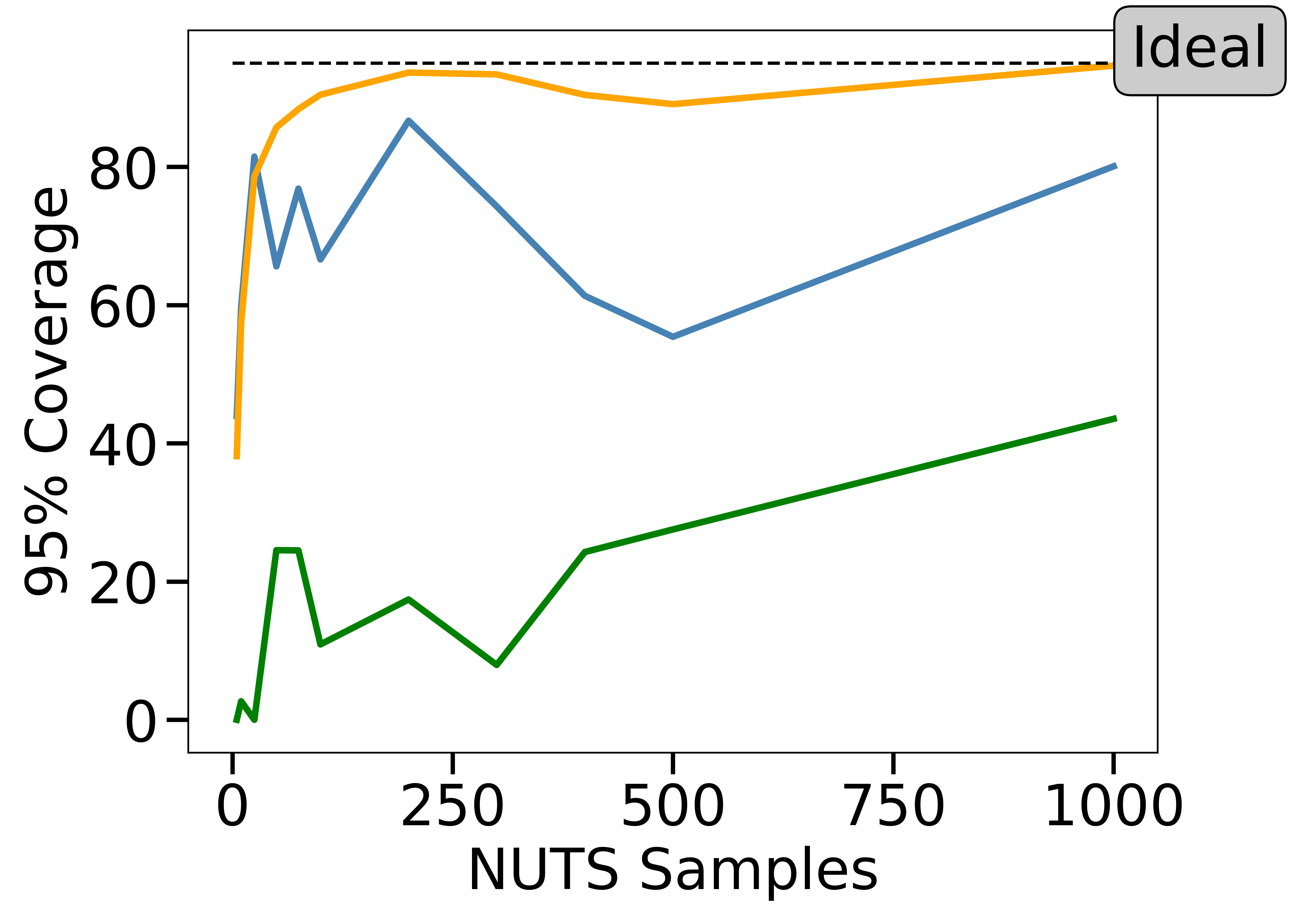
First the hybrid prior for cold starting and reduced sample requirement are ablated and tested:
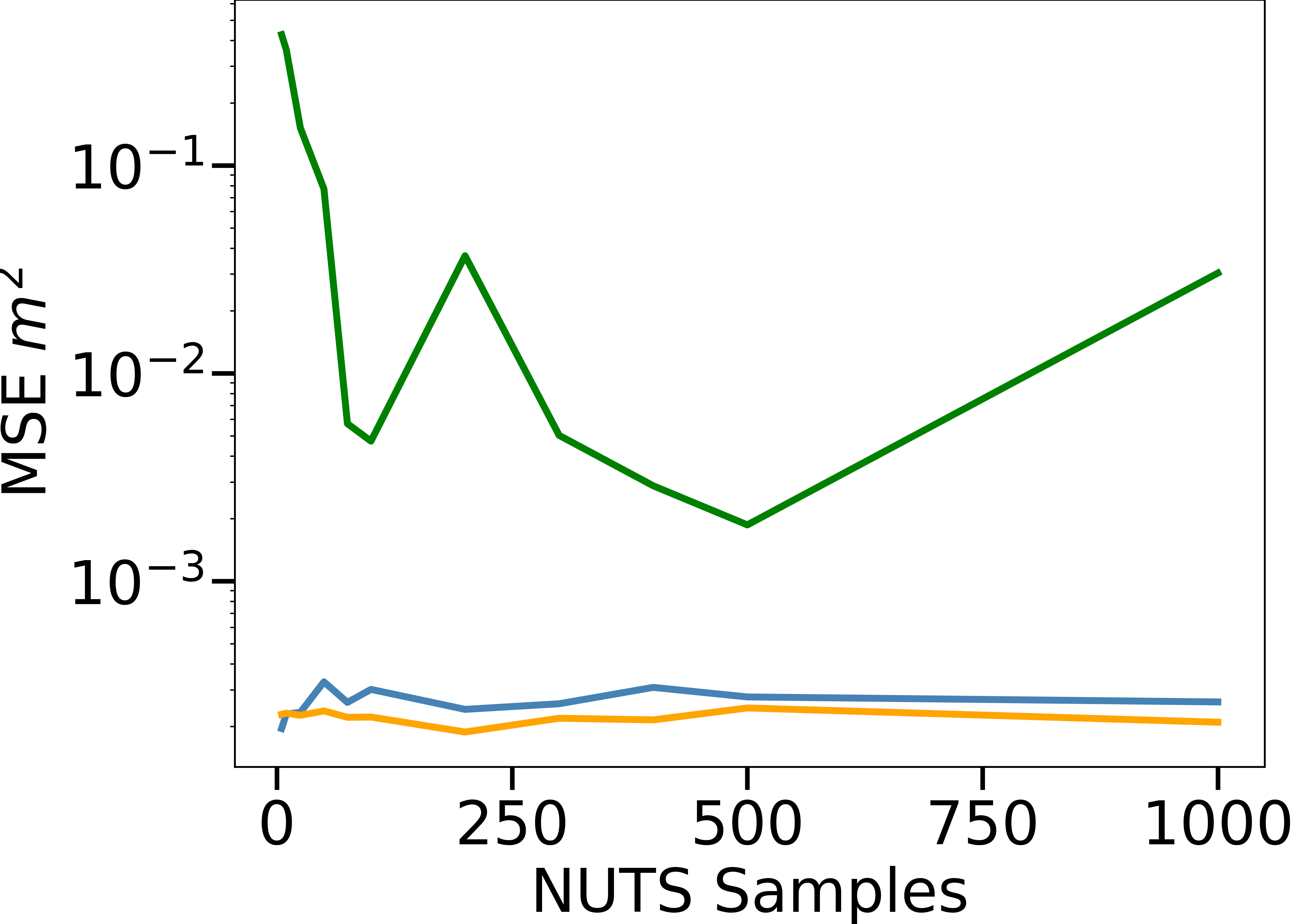
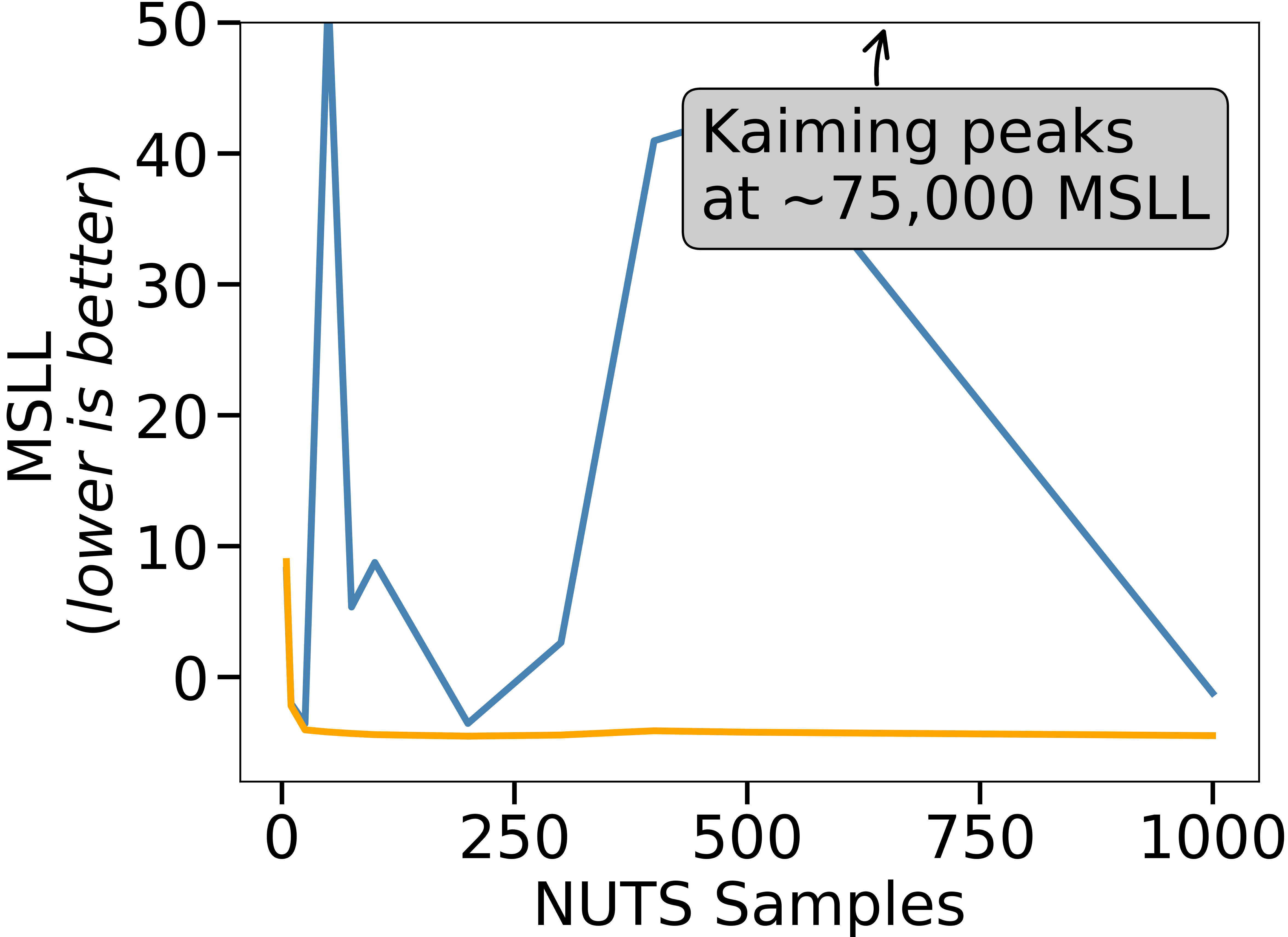
The NUTS samples are then ablated to show the faster convergence with reduced samples
The framework was compared head to head on two other SoTA architectures. (i) A Hilbert space gaussian process (G-Hilbert) and (ii) a deterministic training conditional Gaussian process (G-DTC). The three different datasets used here that can be found at https://github.com/CEA-LIST/large-scale-magnetic-mapping
| Dataset | Method | MSE ($\mu\mathrm{T}^2$) | MSLL | Prediction Time ($\mathrm{ms}$) |
|---|---|---|---|---|
| Simu1D | G-DTC | $7.7\times 10^{-5}$ | $-11.8$ | $2.2$ |
| G-Hilbert | $7.8\times 10^{-5}$ | $-12.3$ | $28$ | |
| BEAMM | $1.84\times 10^{-4}$ | $-11.5$ | $8.2$ | |
| Simu2D | G-DTC | $1.9 \times 10^{-4}$ | $-11.6$ | $8.7$ |
| G-Hilbert | $1.9 \times 10^{-4}$ | $-11.7$ | $28$ | |
| BEAMM | $3.8 \times 10^{-4}$ | $-10.2$ | $7.3$ | |
| Simu3D | G-DTC | $4.9\times 10^{-4}$ | $-11.1$ | $43$ |
| G-Hilbert | $5.1\times 10^{-4}$ | $-10.9$ | $28$ | |
| BEAMM | $9.5\times 10^{-4}$ | $-9.7$ | $11.2$ |
Finally we also ran the framework on hardware to see if the system can be implemented and deployable.
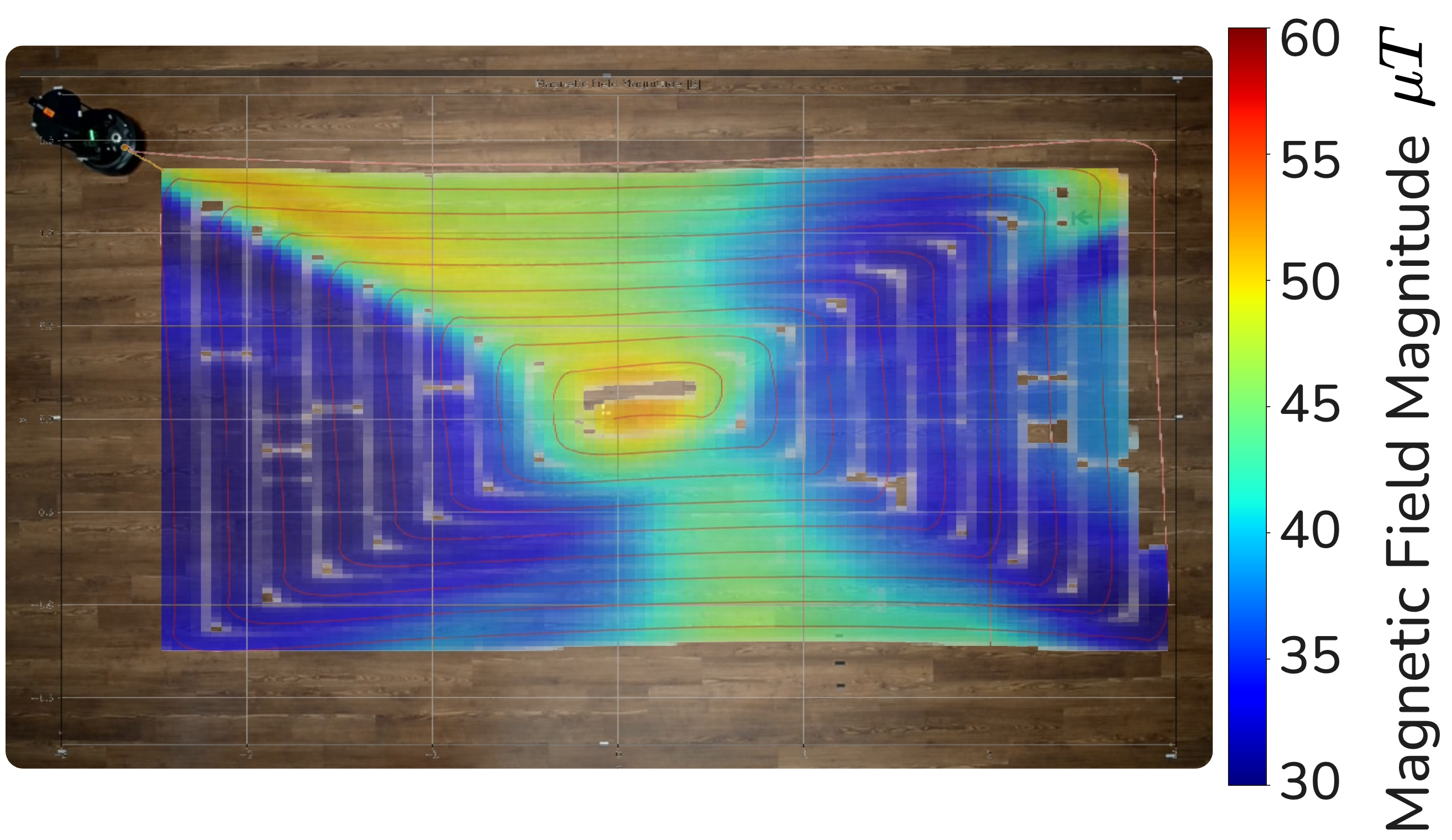
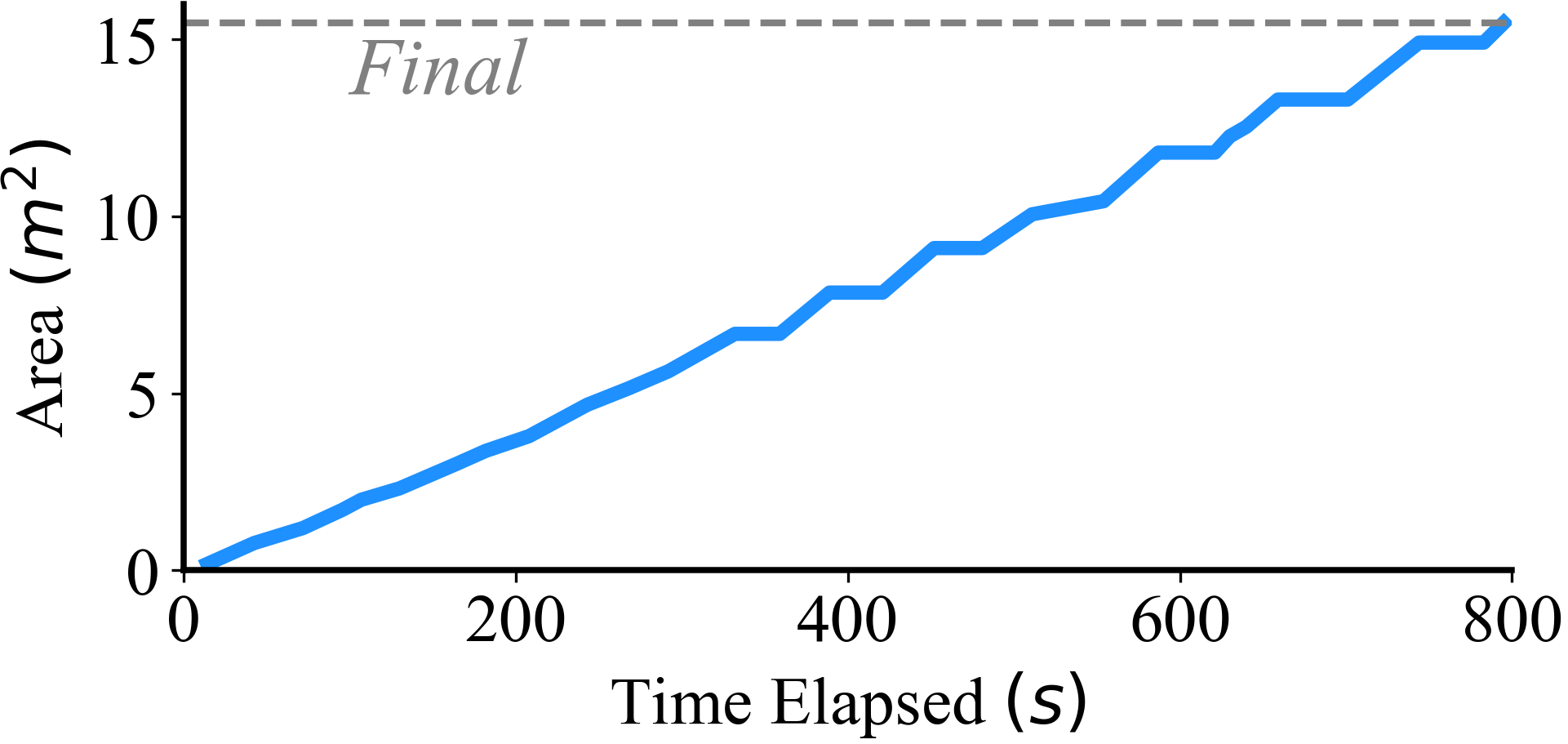
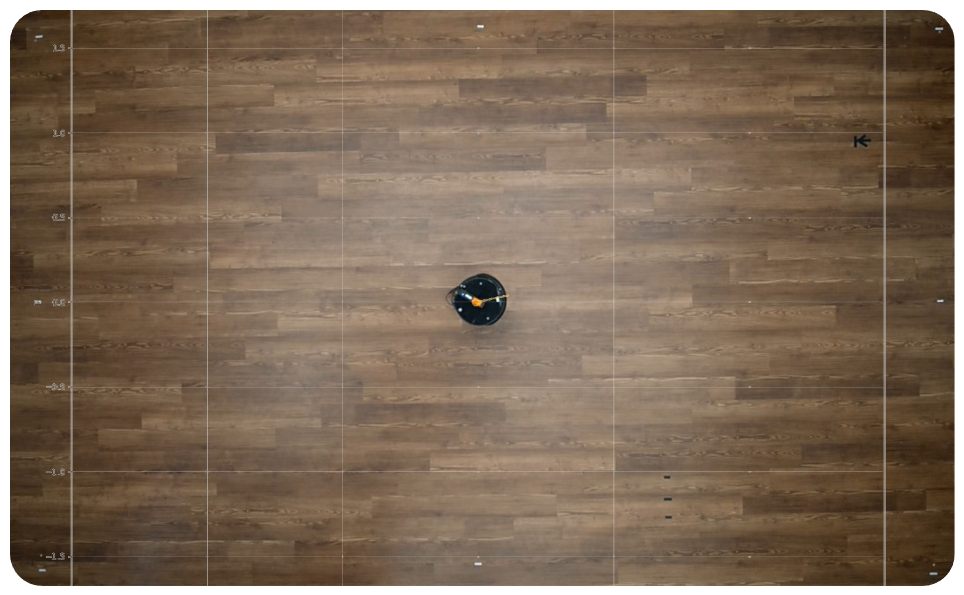
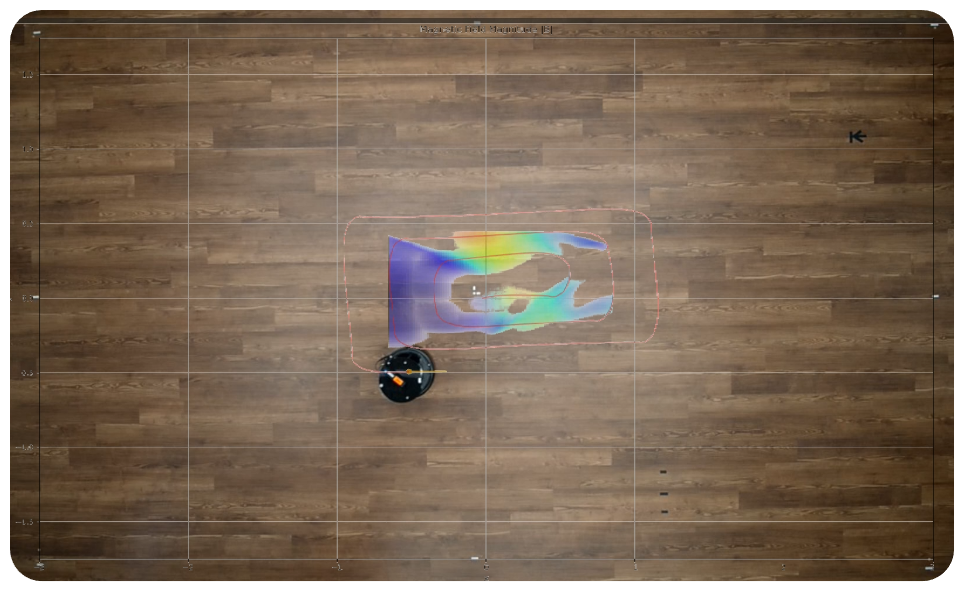
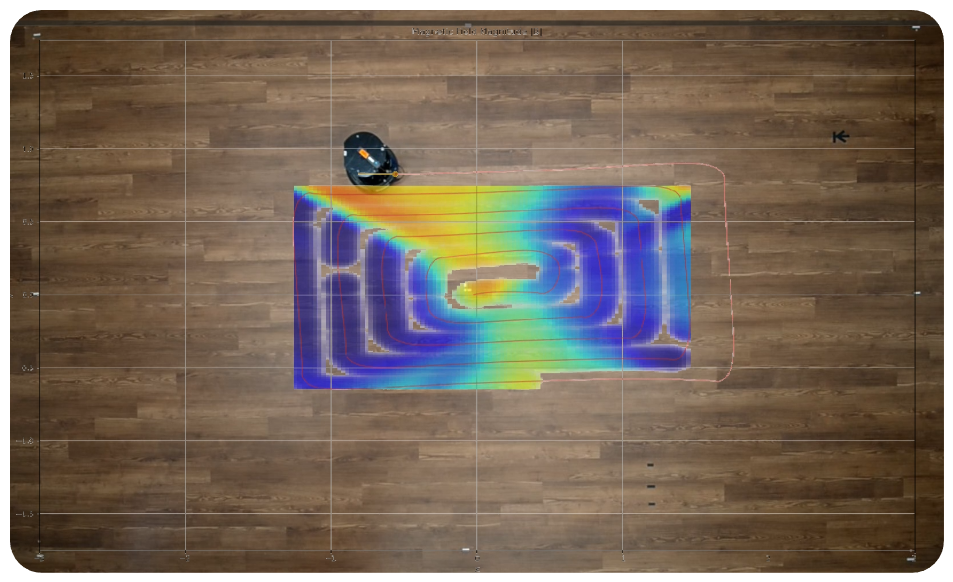
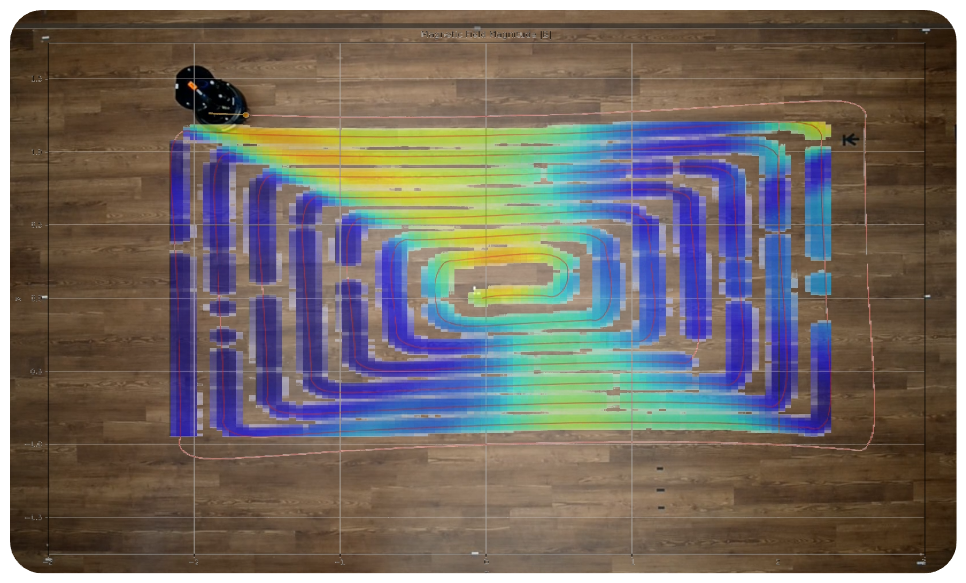
A demonstration of the framework on physical hardware is shown below. The video is sped up 10x as the robot is moving at $0.2 ~\mathrm{m/s}$ as the mapping is on average slow moving.
This website was inspired by TILTED